How Business Brokers Find and Win More Listings
Business Brokerage Growth
Where Your Next Listing Comes From: How Business Brokers Find, Nurture and Win More Sellers
Buyers aren't the hard part. Listings are. Here's where sellers come from, why most of them take longer than you'd like, and how to be the broker they call when they're finally ready.
Quick answer
Business brokers win more listings by working four sources consistently (referral partners such as CPAs and attorneys, past clients, direct outreach, and their own website) and by staying in touch with owners who aren't ready yet, usually through automated drip campaigns that keep the broker top of mind. Vertica CRM supports that with an automatic intake questionnaire for every seller inquiry, a valuation stage with recasting templates, a 60-day nurture sequence after the Opinion of Value, email and SMS campaigns with engagement tracking, and VerticaSign for the engagement agreement.
Buyers find you. Sellers usually don't.
When I started as a business broker, my job was canvassing specific areas and prospecting owners to list their businesses. Back then we called it “pounding the pavement.” It taught me something I've never forgotten: buyers find you. Sellers almost never do, at least not at first.
A good listing attracts buyers on its own. Post it, syndicate it, and inquiries start arriving. But the listing has to exist first, and most owners don't wake up one morning ready to sell. They think about it for months, sometimes years. They test the waters with a casual question to their accountant, or to a broker they met once. Then life nudges them, and they call whoever they remember.
That's the whole game: being the broker they remember.
That's exactly what tools like automated drip campaigns are for, and I'll show you how they work below. But first, a story most brokers will recognize.
The call you never got
Picture an owner named Frank. He runs the HVAC company his father started in 1979. Three years ago his accountant gave him your name, and he invited you out to the shop. You walked the floor together. You met his two sons, who had both decided they didn't want the business. You gave him a valuation, and he went quiet for a long moment.
“Not yet,” he said. “Maybe after my daughter's wedding.”
You liked Frank. You meant to call. Then two deals went sideways in the same month, a new listing needed a CIM, and Frank became a row in a spreadsheet you stopped opening.
This spring you drive past the shop and see a new sign out front: Under New Ownership. Another broker sold it. A few weeks later you run into Frank's accountant, and he tells you Frank had asked about you.
“He figured you'd moved on. The other broker sent him something every month.”
You didn't lose that listing to a better broker, or a lower fee, or a sharper valuation. You lost it to silence. And the hardest part is that Frank wanted to call you.
Why listings, not buyers, are the real bottleneck
Your income depends on closings, and closings depend on inventory. You can be excellent at marketing a business and matching buyers, but with three listings you're capped at three deals.
Most broker software, and most of what we've written on this blog, focuses on handling buyers well once a listing is live, and on taking care of sellers once they've signed. This article is about the step before both: filling your pipeline with sellers in the first place.
Where sellers actually come from
In my experience, good listings come from four places:
- 1Referral partners. CPAs, attorneys, wealth advisors and bankers are often the first to hear that an owner is thinking about selling. One accountant who trusts you can send you more listings than a year of cold outreach.
- 2Past clients and their networks. Sellers you served well know other owners. Buyers you helped often become sellers themselves a few years later.
- 3Direct outreach. Letters, calls and emails. Handing out business cards and brochures as you walk down Broadway or through every mall in your region. Visiting owners in the industries and areas you know best. It's slow, but it builds a pipeline nobody else has. (More on direct outreach below.)
- 4Your website and content. Owners research quietly before they talk to anyone. A valuation request or contact form from your own site is a seller raising their hand. (We've written about SEO for business brokers and why every broker needs a website.)
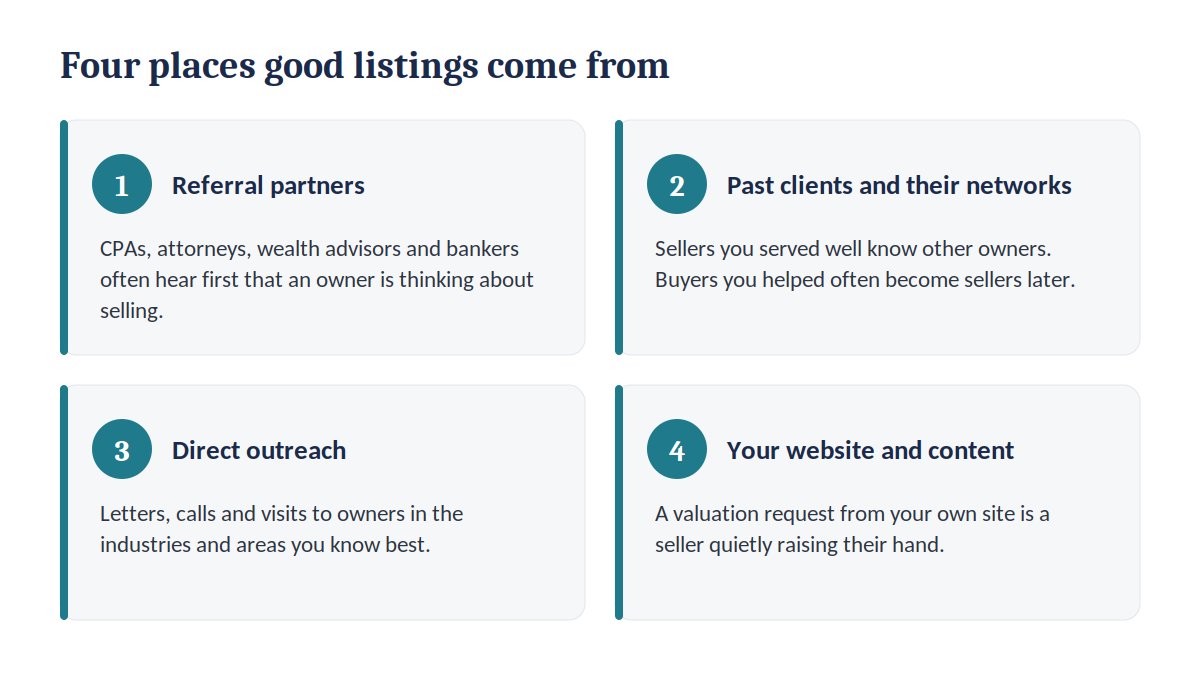
Most brokers lean on one of these. The steadiest pipelines usually come from working all four, and from knowing which one is actually producing.
Direct outreach: why pounding the pavement still works
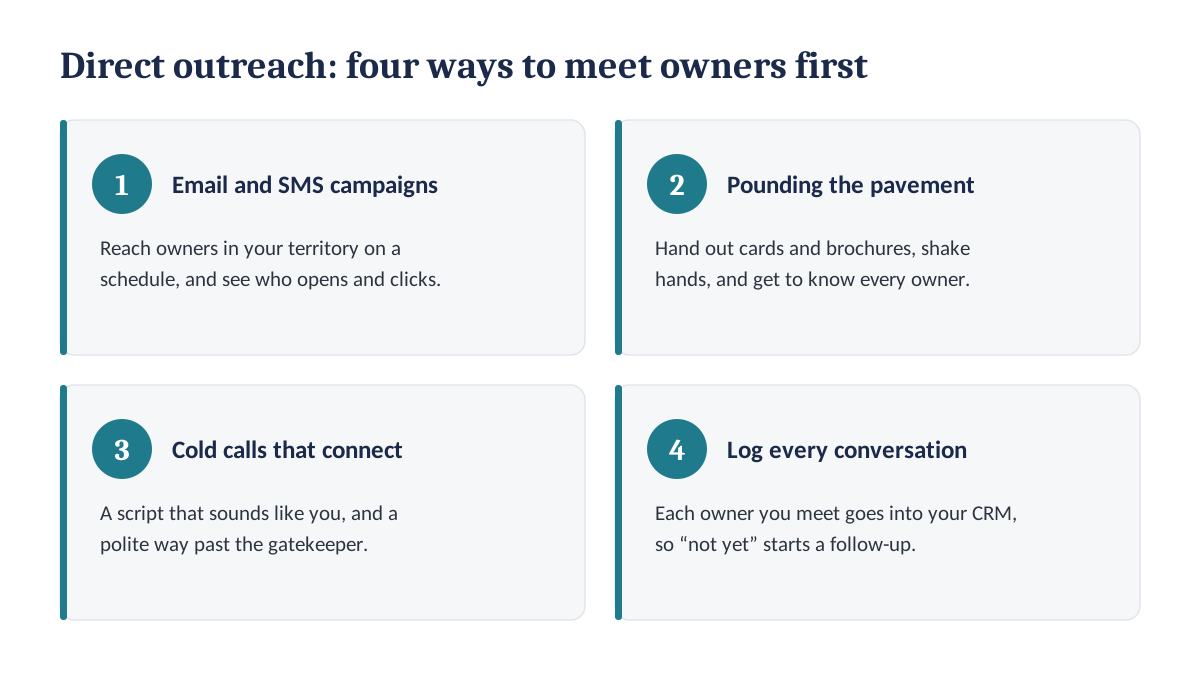
Direct outreach is the one listing source you control completely. Nobody has to refer you and nobody has to find your website. It comes in several parts, and the brokers who do it well use all of them.
Email and SMS campaigns
Build a list of owners in your territory, or in the industries you know best, and reach them on a schedule. With Vertica's email and SMS campaigns, opens and clicks are tracked, so you can see which owners are paying attention before you ever pick up the phone.
Pounding the pavement
This is the “pounding the pavement” I did when I started out: walking the streets, handing out business cards and brochures, and introducing yourself to every owner on the block. It's especially valuable at the beginning of your career, because you get to meet the business owners in your area, shake their hands and put a face to your name. There is nothing like meeting your clients in person and building a personal relationship. An owner who has met you is far more likely to call you than a name on a postcard.
Cold calls that actually connect
Cold calling is a skill, and it's worth learning. Write a script that sounds like you and refine it until it works: who you are, why you're calling, and one useful reason for the owner to talk with you. Then learn how to get past the gatekeeper. The receptionist or office manager often decides whether the owner ever hears your name, so treat them with respect, ask for their help, and find out the best time to reach the owner.
Don't let a good conversation disappear
Every owner you meet on foot or reach by phone should go into your CRM the same day, with notes on what they told you. That way, a “not yet” on the sidewalk becomes the start of a follow-up instead of a business card in a drawer.
Most owners call long before they're ready
Here's the part that costs brokers the most listings. An owner calls, you have a good conversation, and they say, “Not yet. Maybe next year.”
In a spreadsheet, that owner becomes a row you mean to follow up on. Months pass. Active deals get busy. When the owner is finally ready, they call the broker who stayed in touch, and that may not be you.
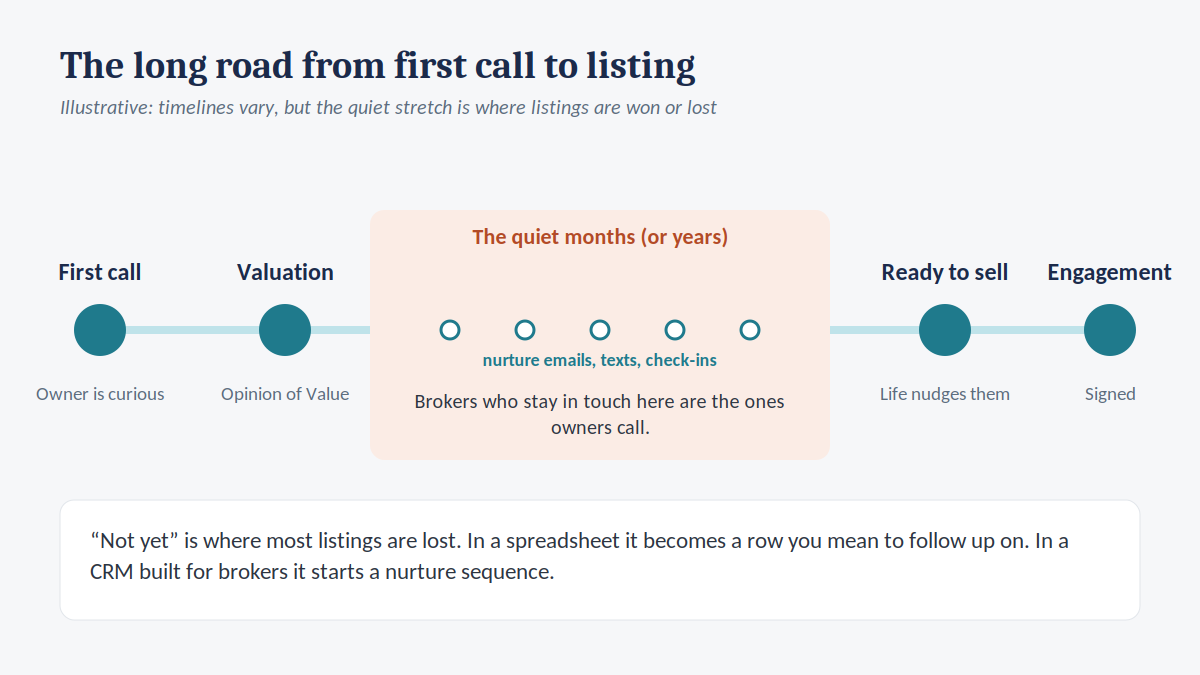
The fix isn't working harder. It's making sure “not yet” starts something instead of ending something.
How drip campaigns turn “not yet” into a listing
A drip campaign is a series of messages that goes out automatically on a schedule, so a prospective seller keeps hearing from you without you having to remember to reach out. Done well, it doesn't feel like marketing. It feels like a broker who keeps thinking about their business.
It works because selling a business is rarely a single decision. It's a slow build. An owner reads a market update and starts wondering what their business is worth now. A tip about exit planning reminds them to get their books in order. Every message is a small, helpful nudge, and every one of them has your name on it. So when the moment finally comes, you aren't a name they have to dig up. You're the broker who's been there all along.
Here's what a good seller drip campaign looks like:
- It starts on its own. In Vertica CRM, delivering the Opinion of Value to an owner who isn't ready enters them into a 60-day nurture sequence automatically. Nobody has to remember to add them.
- It's useful, not salesy. Market updates for their industry, exit-planning tips, and what buyers are looking for right now.
- It's steady, not overwhelming. Regular enough that you stay familiar, spaced out enough that you never feel like a nuisance.
- It uses more than one channel. Email carries the substance, and a short text can follow automatically when an email goes unread.
- It tells you who's warming up. Opens and clicks are tracked, so you can see which owners read every message and which have gone quiet.
- It hands off to you. The campaign keeps you remembered. Your phone call is what turns that attention into an engagement.
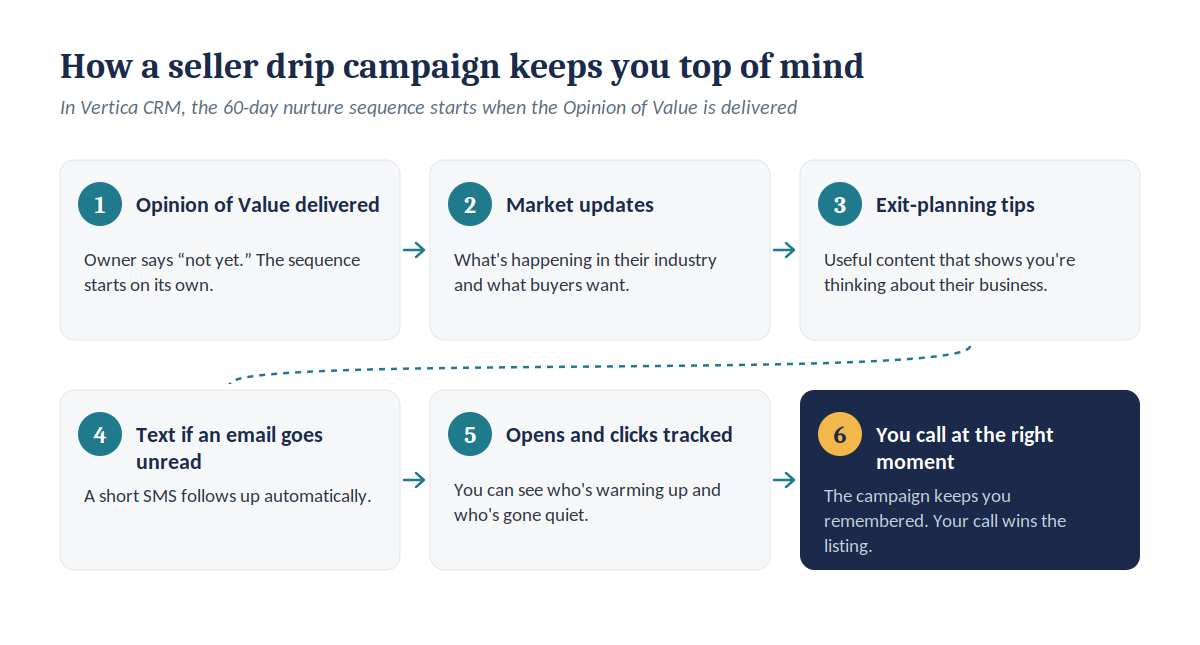
The broker who sold Frank's business didn't have a better pitch. They had a system that kept writing to him while they were busy closing other deals.
Make the valuation the start of the relationship
For most owners, the first real thing you give them is an idea of what their business is worth. That Opinion of Value is the moment they decide whether you know what you're doing.
In Vertica CRM, a new seller inquiry automatically sends your intake questionnaire and creates a follow-up task for you, so the first conversation doesn't depend on you remembering. When the owner uploads their financials, standardized EBITDA/SDE recasting templates and Vertica's True Context AI help normalize the numbers, so you can turn the valuation around faster and with fewer manual steps.
Then comes the part that matters most. If the owner isn't ready to list after seeing the valuation, they go into a 60-day nurture sequence of market updates and exit-planning content, instead of quietly going cold.
Stay remembered without relying on memory
Brokers who win listings are the ones who show up again at the right moment. That takes consistency, and consistency is hard when you're also running active deals.
Vertica's email and SMS campaigns let you stay in touch with every prospective seller from the same system that holds their file. You can keep static lists, such as every owner you valued this year, and dynamic lists that update themselves as owners match the criteria you set. Opens and clicks are tracked, so you can see who's paying attention, and an SMS reminder can go out automatically when an email goes unread.
When an owner starts opening every email, that's usually your cue to pick up the phone. (For more on why this matters, see follow-ups lead to fortunes.)
Treat referral partners like a pipeline, not a favor
Referral partners send you sellers when two things are true: they trust you with their client, and they hear back about what happened. Most brokers take care of the first and forget the second.
Keep each CPA, attorney and advisor in your CRM alongside the sellers they've sent you. When a referred owner gets a valuation, signs an engagement or closes, let the partner know. A short update costs you two minutes and tells the partner their client is in good hands, which is exactly what makes them send the next one.
When they're ready, make it easy to say yes
When an owner finally decides to sell, momentum matters. VerticaSign sends the engagement agreement straight from the seller's record and reminds them every 48 hours until it's signed, and the seller moves into your listing pipeline without anyone retyping their details.
Because VerticaSign is built into the platform and designed specifically for business brokers, one click on the contact record sends a ready-made template. There's none of the uploading, field-placing and re-entering you'd go through with a general-purpose signing tool.
It also shapes their first impression of how you'll run the sale, which is a bigger deal than it sounds. We wrote about that in the real value of a business broker CRM.
Know which sources produce listings
At the end of the year, you should be able to answer one simple question: where did my listings come from?
Record the source of every seller lead when it comes in, whether it's a CPA, a past client, a mailing or your website. Over time, Vertica's reporting can show you which sources turn into valuations, engagements and closed deals, so you can spend more of your time on the ones that pay.
A listing pipeline self-check
Five questions worth answering honestly:
- Do you know how many potential sellers are in your pipeline right now, and roughly when each expects to sell?
- Could you name your three best sources of listings from last year?
- When an owner says “not yet,” does anything happen automatically, or does it depend on you remembering?
- How long does it take you to turn a first conversation into a valuation?
- When a CPA or attorney refers a seller, do they hear back from you about how it went?
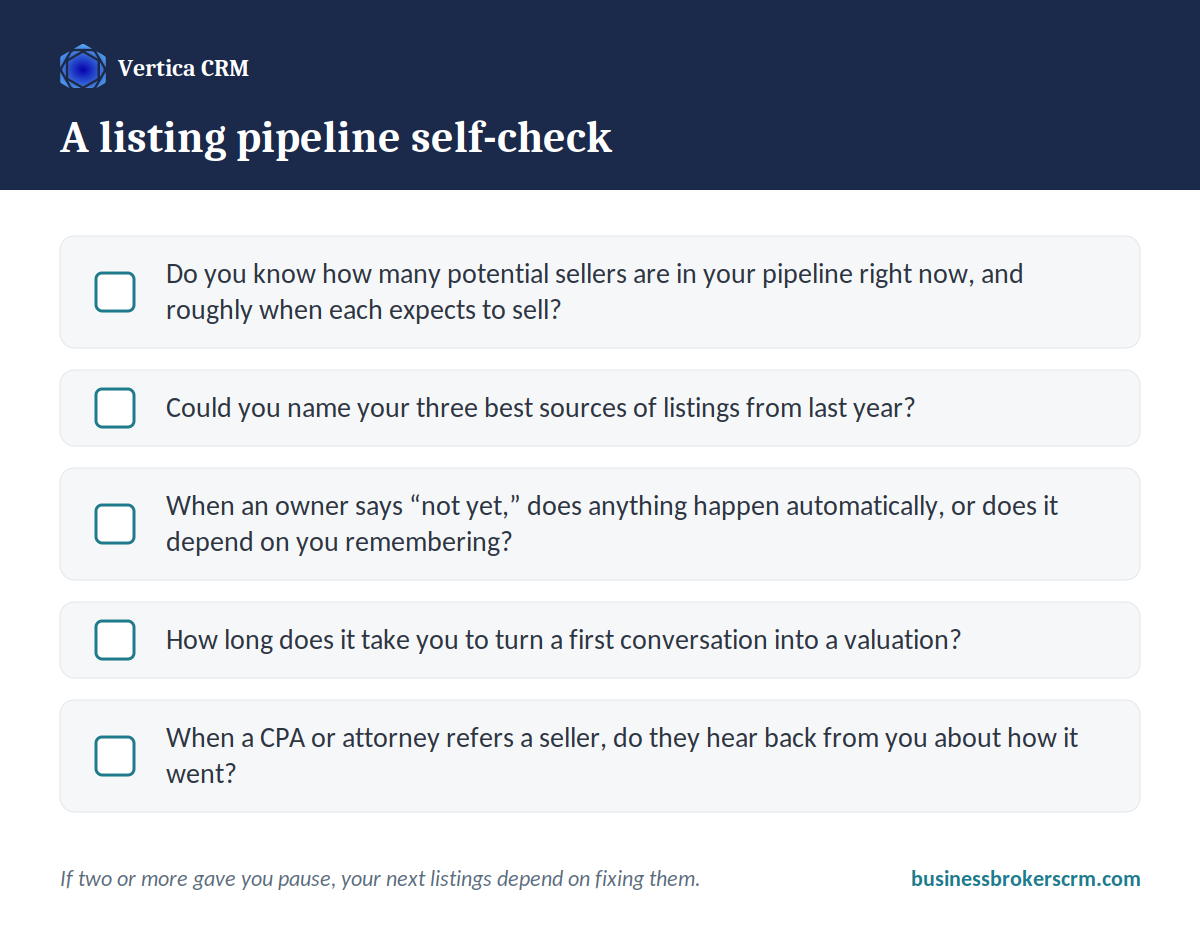
If two or more of those gave you pause, your next listings depend on fixing them more than on finding new tactics.
What it adds up to
Buyers follow good listings. Listings follow relationships, and relationships follow consistency. The brokers with full pipelines aren't luckier. They're the ones a seller remembers when the time comes, because they never let “not yet” turn into silence.
See it on your pipeline
I'll walk you through seller intake, the valuation stage and nurture campaigns using a pipeline that looks like yours. No canned script.
Schedule a Demo Bring a seller who told you “not yet.”Frequently asked questions about finding sellers and winning listings
How do business brokers find sellers?
Most listings come from four places: referral partners such as CPAs, attorneys, wealth advisors and bankers; past clients and the people they know; direct outreach to owners in the industries and areas a broker knows best; and the broker's own website and content. The brokers with the steadiest pipelines tend to work all four and stay in touch with owners who aren't ready to sell yet.
Does cold calling still work for business brokers?
Yes, when it's done well. A short script that sounds natural, a clear reason for the call and a respectful approach to the gatekeeper still open doors with business owners. Cold calls work best alongside email and SMS campaigns and in-person visits, with every conversation logged in the CRM so it leads to a follow-up.
What does “pounding the pavement” mean for a business broker?
It means prospecting in person: walking through a territory, visiting businesses, handing out business cards and brochures, and introducing yourself to owners. It's especially valuable for newer brokers, because it builds face-to-face relationships with the owners in an area long before they're ready to sell.
What are the best sources of business listings?
It depends on the broker and the market, which is why it pays to record where every seller lead comes from. Referral partners are often among the most valuable sources because accountants and attorneys tend to hear first when an owner is thinking about selling, but the only reliable answer for your firm comes from tracking your own results.
How long does it take to turn a seller lead into a listing?
It varies widely. Some owners are ready to sign within weeks, but many first reach out months or even years before they're ready to sell. That long quiet stretch is where most potential listings are lost, so consistent follow-up matters as much as the first conversation.
How does a valuation help a business broker win a listing?
For most owners, an Opinion of Value is the first real thing a broker delivers, and it's when they decide whether the broker knows what they're doing. A clear, well-supported valuation builds trust, and it gives the broker a natural reason to stay in touch if the owner isn't ready to list yet.
What is a drip campaign for business brokers?
A drip campaign is a series of emails, and sometimes texts, that goes out automatically on a schedule to prospective sellers. For business brokers, it keeps owners who aren't ready to sell hearing from you with useful content such as market updates and exit-planning tips, so you're the broker they remember when they're ready. In Vertica CRM, a 60-day nurture sequence starts automatically when the Opinion of Value is delivered to an owner who isn't ready to list.
How should a broker follow up with sellers who aren't ready to sell?
Treat 'not yet' as the start of a relationship rather than the end of a conversation. Regular, useful contact such as market updates and exit-planning content keeps the broker in mind, and tracking which owners open and click those messages shows who is getting closer to a decision.
How do you build a referral network of CPAs and attorneys?
Referral partners send sellers when they trust you with their client and when they hear back about what happened. Keep each partner in your CRM alongside the sellers they've referred, and let them know when a referred owner gets a valuation, signs, or closes.
How does Vertica CRM help business brokers win more listings?
Vertica CRM sends an intake questionnaire and creates a follow-up task for every new seller inquiry, supports the valuation stage with standardized EBITDA/SDE recasting templates and AI extraction of the numbers, enters owners who aren't ready into a 60-day nurture sequence after the Opinion of Value, runs email and SMS campaigns with open and click tracking, and sends the engagement agreement through VerticaSign, with a ready-made template sent in one click from the contact record and automatic reminders every 48 hours until it's signed.
Should business brokers track where their listings come from?
Yes. Recording the source of every seller lead, whether a CPA, a past client, a mailing or the website, shows over time which sources turn into valuations, engagements and closed deals, so you can spend more time on the ones that produce.
Joshua Factor
Founder of Vertica CRM and a former business broker who started out prospecting owners for listings. Vertica CRM has spent 12 years building software exclusively for business brokers and M&A advisors, shaped by feedback from hundreds of brokerage clients.
Related reading
How Vertica CRM Takes Care of Sellers
What happens after the seller signs, from CIM to closing.
The Real Value of a Business Broker CRM
Trust, momentum, and a firm that runs without you.
SEO for Business Brokers
Build trust and generate leads from search.
Follow-ups Lead to Fortunes
Why consistent follow-up closes more deals.
The Power of Vertica CRM Reporting
See what's working across your brokerage.
Vertica Sign
A document signing tool built for business brokers.
Book a demo with the founder
See seller intake, valuations and nurture campaigns on a pipeline like yours.